Data Acquisition Systems
Data acquisition (DAQ) is the path from a physical measurement to a number a computer can store. A sensor turns temperature, pressure, strain or voltage into an electrical signal. Signal conditioning scales and cleans that signal. An analogue-to-digital converter samples it, and software names the result as a channel with a rate, a range and a timestamp.
MatDeck treats that path as one document. Hardware configuration forms set the device, virtual instruments show the live values, and the same channels can be filtered, logged or handed to a SCADA screen. Users who prefer not to write the setup by hand start from a form. Users who prefer code call the same setup from Python or MatDeck Script.
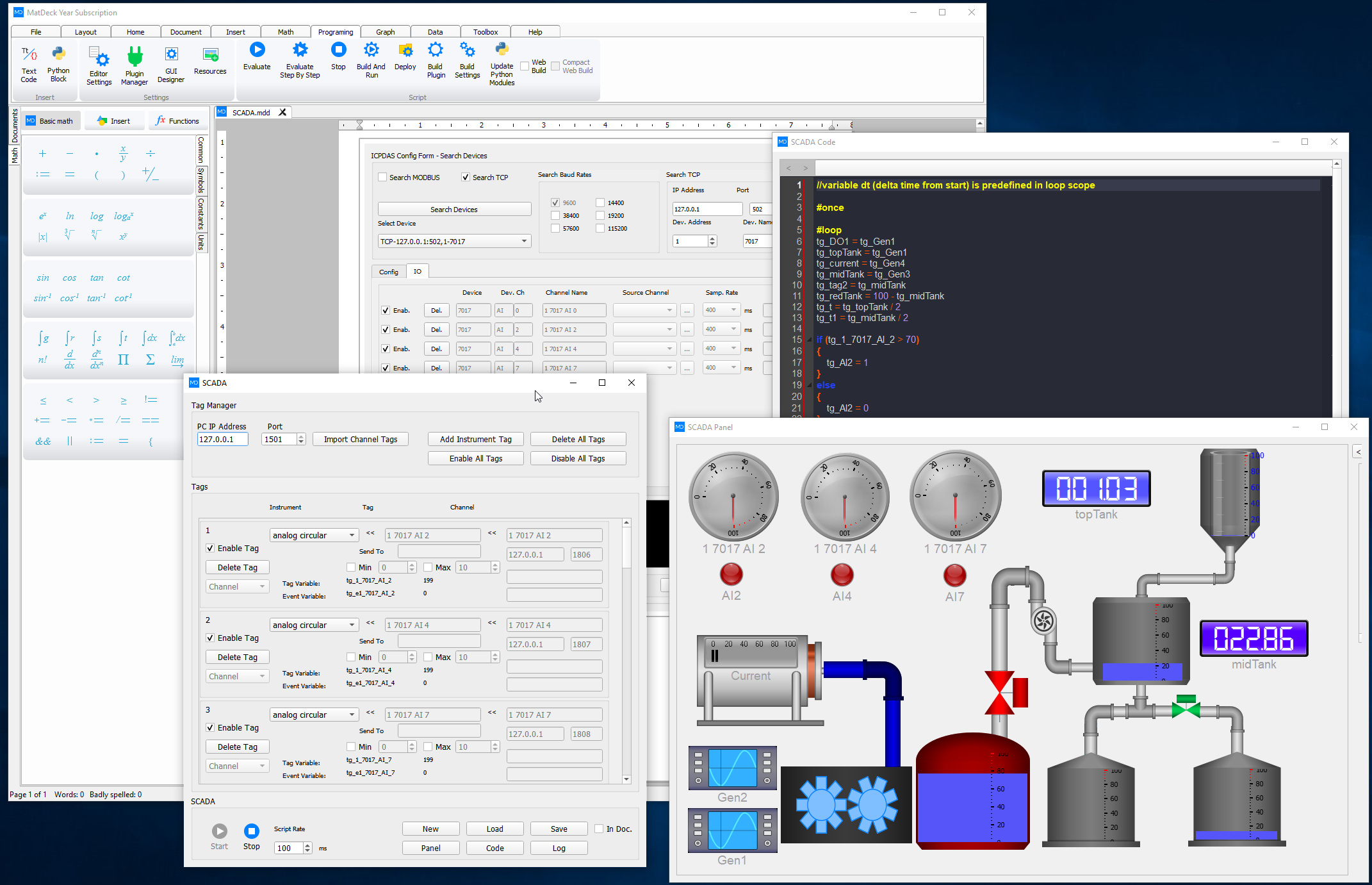
What sits in a typical system
A bench system is usually four pieces: the sensor, the DAQ device, the software that owns the channels, and a place to keep the record. MatDeck covers the software piece for Advantech, LabJack and ICP DAS devices, and for serial and TCP devices that are not on that list. Sample rate, input range and channel count are set before the stream starts, because those choices decide both the file size and the highest frequency you can trust.
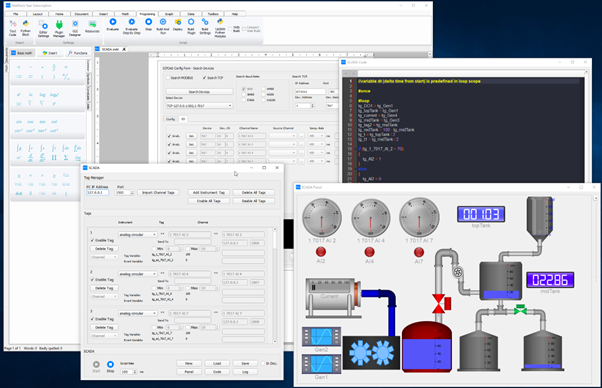
Once the channels exist, the rest of the document can treat them like any other signal: smooth them, plot them, write them to a spreadsheet, or close a control loop. The shop products on this site are the standalone pieces of that chain.